
Depositions play a critical role in legal proceedings, providing both plaintiff- and defense-side attorneys a valuable opportunity to gather information, assess witnesses, and build a strong case. However, a deposition summary may run into hundreds of pages, making it challenging for busy attorneys to read and retain all the details. This is where a well-prepared witness testimony summary and effective deposition transcript analysis become very helpful for legal teams.
By clearly highlighting the essential facts and testimony, deposition summaries help attorneys communicate critical points effectively and objectively, without including personal opinions. You require expertise in litigation, strong writing skills, and a deep understanding of the case to craft a good and effective summary. Attorneys can rely on professional medical review companies to prepare deposition summaries that are meticulously documented, neatly formatted, and useful for trial preparation. These summaries are valuable for building robust medical negligence and personal injury cases, playing a vital role in evidence summarization and the discovery process.
Expert Strategies for Creating Deposition Summaries
Many law firms utilize specialized software designed to manage and summarize deposition transcripts. These tools enable teams to store digital transcripts in the cloud, use color-coded identifiers for highlighting, and annotate text when sharing notes with colleagues. Advanced options include internal search features, which help legal teams pinpoint specific phrases within hundreds of pages.
Professional medical review services also play a crucial role in preparing deposition summaries. You receive condensed summaries that emphasize relevant facts, including dates, names, figures, exhibits, and significant events. These are well-organized and easy to navigate, helping attorneys analyze crucial issues, gather pertinent facts, and prepare their cases more effectively.
Types of Deposition Summaries Lawyers Use
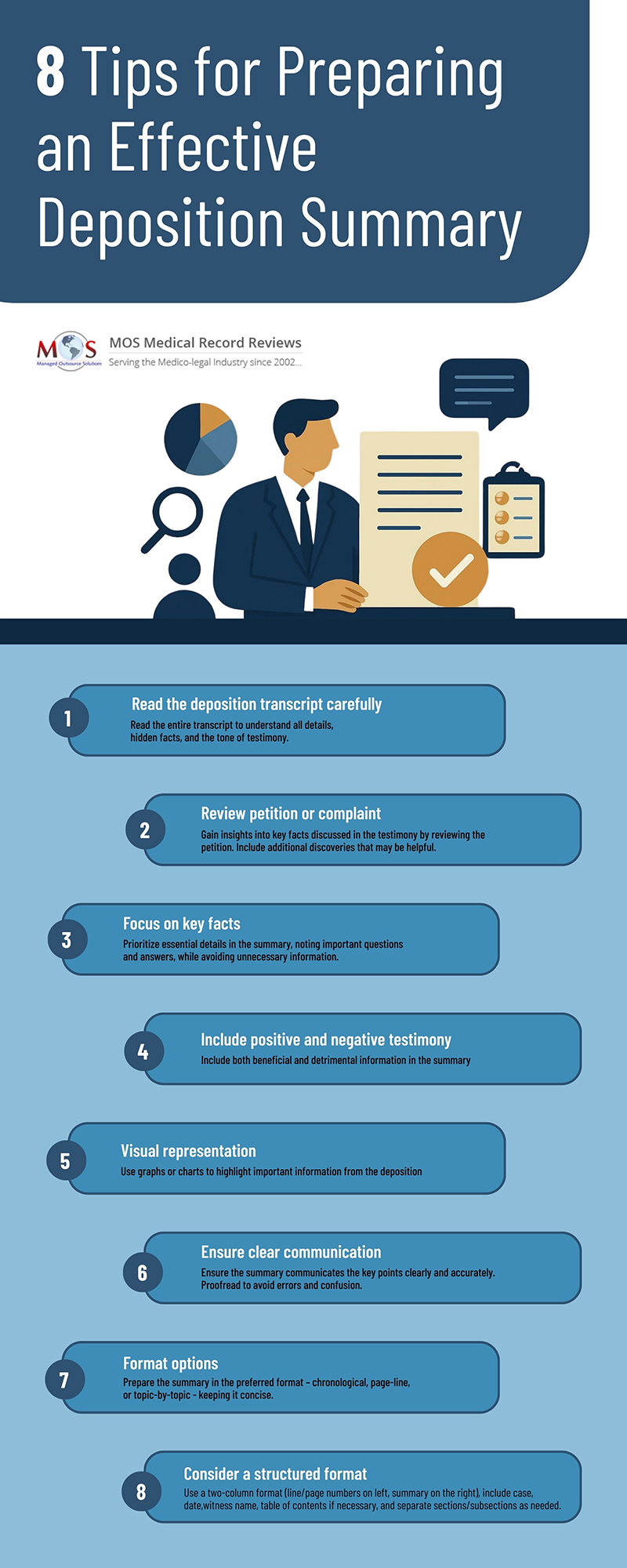
Chronological Summary: Also known as a chronological case summary, this format is organized by the timeline of events as they occurred.
Page-Line Summary: Includes direct references to the transcript’s page and line numbers, along with exhibit references, for quick and easy verification.
Topic-by-Topic Summary: The summary is organized in terms of specific subjects or themes, enabling attorneys to focus on one issue at a time.
Check out the infographic below
Get precise deposition summaries that make your trial prep faster and easier!
Call (800)-670-2809
![Welcome 2026 with Our Exclusive New Year Offer [Infographic]](https://www.mosmedicalrecordreview.com/wp-content/uploads/2026/01/welcome-2026-with-our-exclusive-new-year-offer-400x250.webp)

![Types of Medical Malpractice Claims That Need Medical Record Review [Infographic]](https://www.mosmedicalrecordreview.com/wp-content/uploads/2023/09/types-medical-malpractice-claims-medical-record-review-400x250.jpg)